Thursday, July 10, 2025

Bobby Hull’s First 4-Goal NHL Game Came at the Expense of Johnny Bower and the Toronto Maple Leafs


On February 21, 1960, Bobby Hull delivered one of the most memorable offensive performances of his career at Chicago Stadium, scoring four goals in a 7-5 Chicago Black Hawks win over the Toronto Maple Leafs. This milestone marked Hull’s first of four career four-goal games in the NHL. He never surpassed that number in a single match, despite recording an impressive 30 career hat tricks.

The game opened with Hull striking early. At 8:07 of the first period, he buried his 30th goal of the season, assisted by Murray Balfour and Dollard St. Laurent. Early in the second, he scored again, this time with help from Pierre Pilote and Bill Hay, making it 2-0 for Chicago.

Even after Toronto’s Frank Mahovlich cut the lead in half, Hull completed his hat trick just over four minutes into the second frame, assisted by Elmer “Moose” Vasko and Pilote. Before the period ended, Hull added an assist on Balfour’s goal to stretch the lead to 5-2.

Then came the dagger: just 59 seconds into the third period, Hull scored his fourth goal of the night, making it 6-2. This goal would stand as the game-winner, his 33rd of the season. Bill Hay added another before Toronto mounted a furious but ultimately futile comeback with goals from Gerry James, Johnny Wilson, and Tim Horton.

A Golden Season for the “Golden Jet”

By the end of the 1959-60 season, Hull tallied 39 goals and 42 assists for 81 points, narrowly edging Boston’s Bronco Horvath for the Art Ross Trophy as the NHL’s top scorer. Despite the scoring crown, Hull fell short of MVP honors, finishing second in Hart Trophy voting behind Detroit’s Gordie Howe.

It was a breakout campaign for the 21-year-old Hull, and his first 4-goal game against a future Hall of Famer like Johnny Bower remains a signature performance in his legendary career.

Wednesday, July 9, 2025

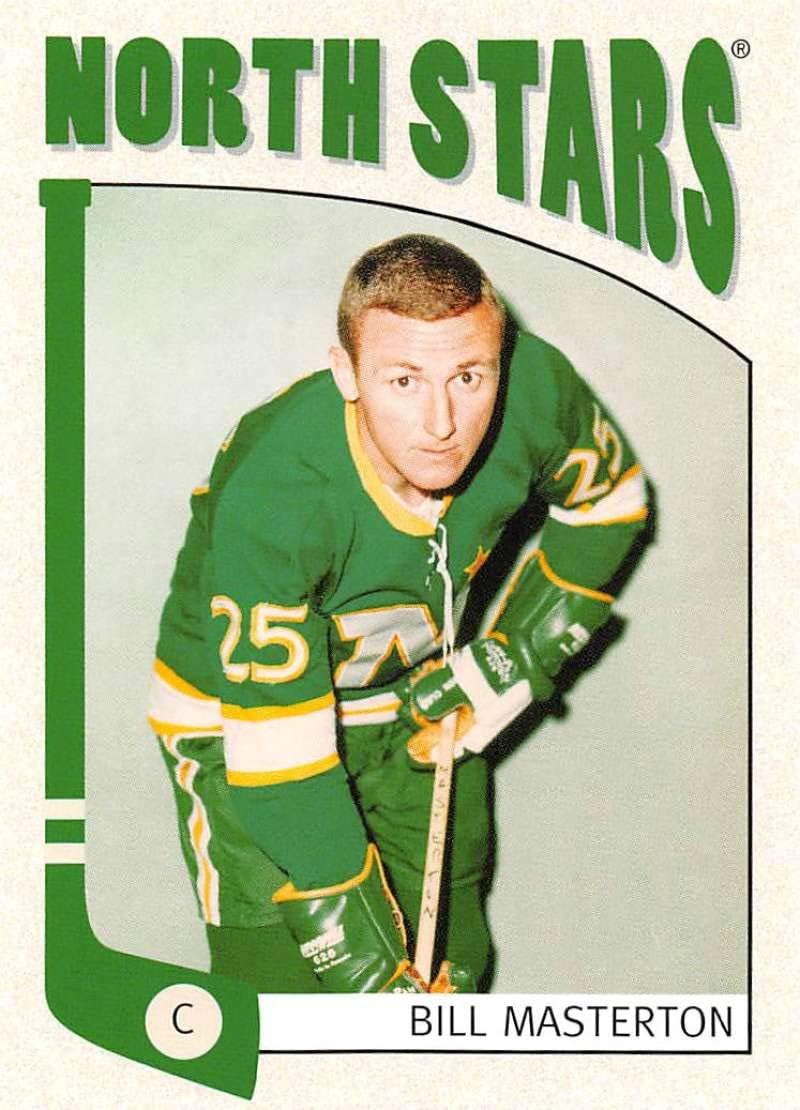
Bill Masterton Makes History in North Stars Debut Game


On October 11, 1967, history was written on multiple fronts in the National Hockey League. The expansion-era Minnesota North Stars played their very first NHL game on the road against the also-new St. Louis Blues. This historic matchup marked the NHL debut for both teams and one unforgettable goal-scorer.

That man was Bill Masterton, who would sadly play only 38 NHL games before a tragic on-ice injury took his life on January 13, 1968. But on this night, Masterton made a lasting mark in the league’s record books.

With just under five minutes remaining in the second period, and his team on the power play, Masterton scored the first goal in Minnesota North Stars history, an unassisted tally at the 15:20 mark. It was one of four shots he would take on St. Louis netminder Seth Martin, who, like Masterton, was making his NHL debut. Martin would go on to play only 32 NHL games, all in that single 1967-68 season.

The third period brought more milestones. Larry Keenan etched his name into the St. Louis Blues' history by scoring their first ever goal, assisted by Bob Plager and Fred Hucul. The game would end in a 2-2 tie, with DaveBalon and Wayne Rivers trading goals for Minnesota and St. Louis, respectively.

Additional firsts included:

  • Bob Plager receiving the first penalty in Blues franchise history.

  • Murray Hall taking the North Stars' first penalty.

  • The first recorded fight between the two teams: Roger Picard (Blues) vs. Ted Taylor (North Stars).

About Bill Masterton

Born in Winnipeg, Manitoba, Bill Masterton played three years of NCAA hockey with the University of Denver Pioneers from 1958-59 to 1960-61 before turning pro. In 1961-62, he helped the Hull-Ottawa Canadiens to an EPHL title. That club featured future NHLers Keith McCreary, Jim Roberts, BarclayPlager, Terry Harper and Cesare Maniago.

Moving up the AHL for 1962-63, Masterton finished seventh in overall scoring with 82 points playing for the Cleveland Barons. He left for the USHL after that and would play for the U.S. National Team in 1966-67, prior to joining the North Stars.


Tuesday, July 8, 2025

Tim Kerr’s Historic 4-Goal Period Still Stands As NHL Playoff Record


On April 13, 1985, Tim Kerr of the Philadelphia Flyers etched his name into NHL playoff history with a jaw-dropping performance that still hasn’t been topped. Facing the New York Rangers in Game 3 of their opening-round playoff series, Kerr exploded for four goals in just 8 minutes and 16 seconds, all within the second period at Madison Square Garden.

Before the scoring spree, the Flyers trailed 3-2, and Kerr hadn’t registered a single point. That changed at 10:06 of the second frame, when he lit the lamp for his first goal. What followed was one of the most dominant stretches by an individual player in Stanley Cup Playoff history.

  • Three of the four goals came on the powerplay

  • Peter Zezel assisted on three of them

  • All four beat Rangers goalie Glen Hanlon, who was pulled after the fourth

The outburst gave Philadelphia a 6-3 lead. Despite a late push from the Rangers, including third-period goals by Don Maloney and Anders Hedberg, the Flyers hung on for a 6-5 win and a sweep of the best-of-five series. The Flyers advanced past the Islanders and Nordiques before ultimately falling to the powerhouse Edmonton Oilers in the Stanley Cup Final.

The record has since been matched but never surpassed. On April 25, 1989, Mario Lemieux of the Pittsburgh Penguins netted four goals in the first period of a 10-7 win, coincidentally against the Flyers. Lemieux added a fifth goal and three assists for an unforgettable eight-point night. Even more remarkably, Tim Kerr was on the ice for that game too, contributing two goals and two assists for Philadelphia.

About Tim Kerr

Tim Kerr played 655 regular season and 81 playoff games in the National Hockey League between 1980-81 and 1992-93 with the Philadelphia Flyers, New York Rangers and Hartford Whalers. He came to the Flyers undrafted after four years of junior, mostly with the Kingston Canadiens.

Over his first three year with the Flyers, Kerr scored a total of 54 regular season goals. In the following two, 1983-84 and 1984-85, he scored exactly 54 in each campaign. He followed that up with a pair of 58 goal seasons. Unfortunately, knee and shoulder injuries cut short his NHL career.