Showing posts with label Bruce Gamble. Show all posts

Tuesday, September 22, 2026

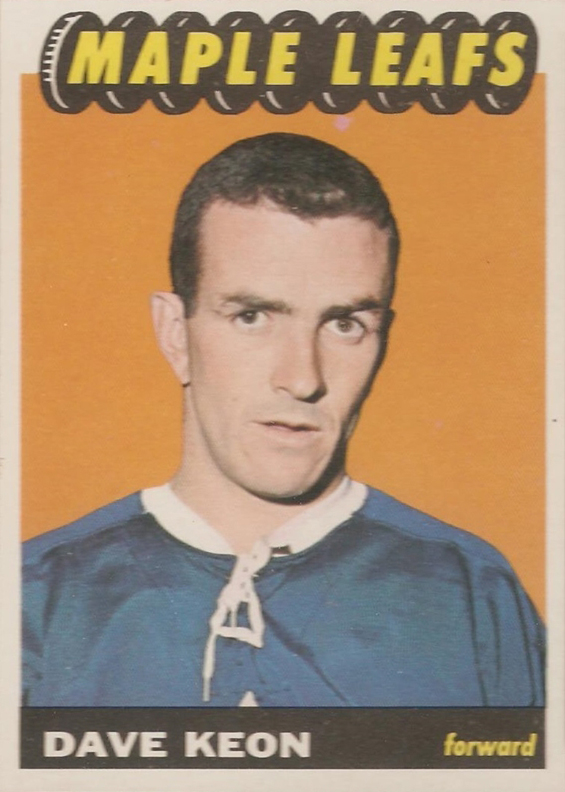
Dave Keon Ends Nine-Game Goal Drought With Natural Hat Trick (1966)

Dave Keon found a welcome scoring breakthrough on March 5, 1966. Entering the Toronto Maple Leafs’ matchup with the Chicago Blackhawks at Maple Leaf Gardens, he had gone nine consecutive games without a goal. That drought ended emphatically as Keon scored a natural hat trick to lead Toronto to a 5–0 victory.


Highlights

  • Keon entered the game with a nine-game goal drought.

  • His opening goal at 1:07 stood as the game-winner.

  • He completed a natural hat trick at 12:17 of the second period.

  • George Armstrong and Ron Ellis added third-period goals.

  • Bruce Gamble stopped all 33 Chicago shots.

  • Bob Pulford led Toronto with eight shots but recorded no points.

  • Bobby Hull led Chicago with six shots.


Keon Strikes Early Against Glenn Hall

Keon needed just 1:07 to score his 19th goal of the 1965–66 NHL season. Bob Baun and Allan Stanley assisted on the opening goal against Chicago goaltender Glenn Hall. It proved to be the only goal of the first period and, with Bruce Gamble keeping the Blackhawks off the scoreboard, the eventual game-winner.

A Natural Hat Trick in the Second Period

A cross-checking penalty assessed to Stan Mikita at the end of the first period gave Toronto a power play to begin the second. Keon capitalized just 50 seconds after the intermission, scoring with assists from Kent Douglas and George Armstrong. At 12:17, he struck again, this time with help from Larry Hillman. By scoring the game’s first three goals, Keon completed a natural hat trick and put the Maple Leafs firmly in control.

Armstrong and Ron Ellis added third-period goals to complete the 5–0 win. Keon finished with six shots on net, converting half of them. Bob Pulford was even busier around the Chicago goal, recording eight shots, although he finished without a point.

Bruce Gamble Keeps Chicago Quiet

At the other end, Gamble stopped all 33 shots he faced to earn the shutout. Bobby Hull led Chicago with six shots, but even the Blackhawks’ most dangerous scorer could not find a way through Toronto’s goaltender.

The hat trick stood out during an otherwise lean scoring stretch for Keon. After going nine games without a goal before facing Chicago, he scored just three more over Toronto’s final 14 games of the season. On this night, however, his finishing touch and Gamble’s perfect performance combined for a decisive Maple Leafs victory.

Keon and Me: My Search For The Lost Soul Of The Leafs cover

Keon and Me: My Search For The Lost Soul Of The Leafs

A heartfelt journey through the legacy of Dave Keon and the soul of the Toronto Maple Leafs franchise.

Buy on Amazon
The PDF versions of some of our hockey books are now available for free download: Take a look!

Monday, October 20, 2025

Johnny Bower’s Final NHL Shutout: A Vintage Performance in Philadelphia

On December 12, 1968, in the twilight of his remarkable career, Johnny Bower turned back the clock one last time. Playing at the Spectrum in Philadelphia, the veteran netminder stopped all 27 shots he faced to backstop the Toronto Maple Leafs to a 1-0 win over the Flyers. Ron Ellis provided the game’s lone goal, beating Bernie Parent for the decisive tally. Among the Flyers, Simon Nolet kept Bower busiest, firing five shots on goal.

Earlier that same 1968-69 season, Bower had recorded his final home shutout at Maple Leaf Gardens, a 2-0 victory over the Boston Bruins. In that contest, he turned aside 29 shots while Larry Mickey and Dave Keon did the scoring. Keon’s third-period shorthanded marker against Gerry Cheevers sealed the win, in a game that also featured a spirited scrap between Tim Horton and Derek Sanderson.

That season would be Bower’s last as a regular contributor, appearing in 20 regular-season and four playoff games while sharing duties with Bruce Gamble. The following year, he suited up for just a single game before retiring from the NHL.

Between 1953-54 and 1969-70, Bower appeared in 552 regular season and 74 playoff games with the New York Rangers and Toronto Maple Leafs. Known for his fearless play and famous poke check, “The China Wall” became one of hockey’s most beloved figures and, fittingly, his career ended as it had so often been defined: with a shutout.

Inducted into the Hockey Hall of Fame in 1976, Johnny Bower’s final blanking of the Flyers remains a classic example of his enduring brilliance between the pipes.
The PDF versions of some of our hockey books are now available for free download: Take a look!

NHL Hockey Trivia: Johnny Bower

Much more NHL hockey trivia can be found at our website: World's Best Hockey Trivia

1. Before joining the Toronto Maple Leafs, Johnny Bower began his NHL career with which team?


2. Bower was affectionately nicknamed “The China Wall.” What was the main reason for this nickname?


3. How many Stanley Cups did Johnny Bower win with the Toronto Maple Leafs?


4. What unique goaltending technique was Johnny Bower especially known for perfecting?


5. In what year was Johnny Bower inducted into the Hockey Hall of Fame?


Sunday, August 31, 2025

Bill Collins Torches Leafs with Back-to-Back Hat Tricks in 1970

When the Minnesota North Stars reached game 59 of the 1969-70 season, Bill Collins had just 13 goals to his name. That all changed on March 1, 1970, when the Toronto Maple Leafs came to town.

At the Met, Collins exploded for a hat trick, his 14th, 15th, and 16th of the season, all against Leafs netminder Bruce Gamble. Minnesota dominated the night with an 8-0 blowout, outshooting Toronto 40-41. Cesare Maniago was rock-solid, turning away all 41 shots for the shutout. Bill Goldsworthy and J.P. Parise chipped in with two goals and two assists each, but Collins set the tone with his relentless play and seven shots on goal.

Less than a week later, the two teams met again at Maple Leaf Gardens. And once more, Collins found his magic. This time he struck for another three goals, numbers 18, 19, and 20 on the year, with the first two coming shorthanded. Remarkably, he scored on all three of his shots, again at the expense of Bruce Gamble, who was pulled in favor of Marv Edwards after the second period. Minnesota rolled to an 8-3 win as Gump Worsley turned aside 44 of 47 shots.

Though Collins didn’t pick up a single assist in either game, that reflected his style during the 1969-70 campaign: pure goal-scoring. He finished the season with a career-best 29 goals, paired with just nine assists. It was the first of three seasons where he crossed the 20-goal mark, later tallying 21 with the Detroit Red Wings in 1972-73 and 22 with the St. Louis Blues in 1974-75.

About Bill Collins

After several years in the minors, Bill Collins got his NHL start after the Minnesota North Stars drafted him from the New York Rangers organization in the 1967 NHL Expansion Draft. Originally a prospect of the Toronto Maple Leafs, he was traded to the Rangers on February 22, 1964, along with Arnie Brown, Dick Duff, Bob Nevin and Rod Seiling for Andy Bathgate and Don McKenney.

Collins played 768 regular season and 18 playoff games in the National Hockey League between 1967-68 and 1977-78 with the North Stars, Montreal Canadiens, Detroit Red Wings, St. Louis Blues, New York Rangers, Philadelphia Flyers and Washington Capitals.

NHL Hockey Trivia: Bill Collins

Much more NHL hockey trivia can be found at our website: World's Best Hockey Trivia

1. Which team did Bill Collins score consecutive hat tricks against in March 1970?


2. Which Toronto goalie did Collins score his goals on during those games?


3. How many goals did Bill Collins finish the 1969–70 season with?


4. How many of Collins' goals in the second hat trick were scored shorthanded?


5. Who recorded the shutout for Minnesota in the 8–0 game (stopping 41 shots)?


Saturday, July 26, 2025

Toronto Maple Leafs Waste Bruce Gamble’s Heroics in 1-0 Loss to Rangers


On
October 19, 1969, the Toronto Maple Leafs visited Madison Square Garden to take on the New York Rangers in what would be their fourth game of the 1969-70 NHL season. For Leafs fans, the game felt like a one-man show and that man was goaltender Bruce Gamble.

The Rangers won 1-0 on an early goal from Vic Hadfield at the 7:33 mark of the first period, assisted by Jean Ratelle and Brad Park. That lone tally held up the rest of the way, not because the Rangers went into a defensive shell, but because Gamble stood on his head. He turned aside 44 of 45 shots, keeping the Leafs in the game all night long. Hadfield and Ratelle each had seven shots apiece, while former Leaf Ron Stewart chipped in with six.

On the flip side, Ed Giacomin had one of the easiest shutouts of his career. Toronto managed just 17 shots on net, with Paul Henderson and Bob Pulford accounting for nearly half with four shots each.

The lack of offense became a season-long theme. The Leafs finished last in the East Division, a brutal 21 points behind the next-closest team. They scored a division-low 222 goals and allowed a division-high 242, despite Gamble's solid play. Over 52 games, Gamble had five shutouts and a .915 save percentage, remarkable numbers considering the team's struggles.

Bruce Gamble’s career spanned from 1958-59 to 1971-72, playing with the Rangers, Bruins, Leafs, and Flyers. Though solid between the pipes, he’s often remembered for his heart attack during a game in 1972 while playing for the Flyers, a game he finished despite the medical emergency.


Toronto Maple Leafs at Rangers – October 19, 1969 Trivia

We have much more hockey trivia at our hockey trivia website!

1. Who scored the only goal in the Rangers' 1-0 win over the Maple Leafs on October 19, 1969?

  • A) Rod Gilbert
  • B) Vic Hadfield ✅
  • C) Jean Ratelle
  • D) Brad Park

2. How many shots did Bruce Gamble stop in this game?

  • A) 35
  • B) 40
  • C) 44 ✅
  • D) 47

3. Which former Leaf had six shots on goal for the Rangers in that game?

  • A) Ron Stewart ✅
  • B) Dick Duff
  • C) Bob Nevin
  • D) Phil Goyette

4. What was the Maple Leafs’ shot total in the 1-0 loss?

  • A) 14
  • B) 17 ✅
  • C) 21
  • D) 25

5. What serious health event is Bruce Gamble remembered for during a game in 1972?

  • A) Concussion
  • B) Broken collarbone
  • C) Heart attack ✅
  • D) Eye injury