Showing posts with label brad park. Show all posts

Friday, October 23, 2026

Ross Lonsberry’s Last-Second Goal Gives Kings a 5–4 Win Over Rangers in 1970

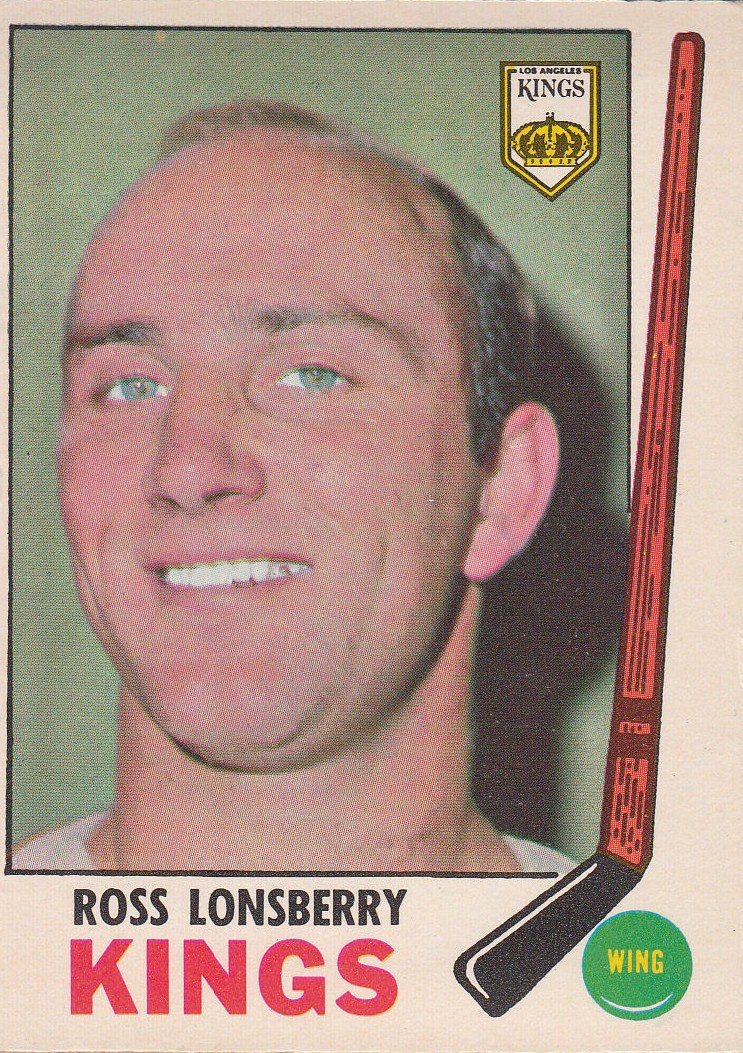
1969-70 O-Pee-Chee 104 NHL hockey card featuring Ross Lonsberry of the Los Angeles Kings.

Ross Lonsberry waited until the final second to make his offensive contribution count. On January 28, 1970, at the Forum in Los Angeles, he scored with one second remaining to give the Kings a dramatic 5–4 victory over the New York Rangers. His ninth goal of the season capped a finish that featured three goals in the final 2:38.


Highlights

  • Lonsberry scored at 19:59 of the third period on January 28, 1970.

  • His ninth goal of the season gave Los Angeles a 5–4 victory.

  • The teams combined for three goals in the final 2:38.

  • Lonsberry accumulated nine penalty minutes, including a fight with Brad Park.

  • Neither team scored a power-play goal.

  • Leon Rochefort and Larry Cahan assisted on the winner.

  • Bill Flett recorded seven shots, while Wayne Rutledge made 22 saves.


Before delivering the winner, Lonsberry had been busy collecting penalty minutes. He received a hooking minor just 47 seconds into the game, fought Brad Park in the second period and took another hooking penalty in the third. That left him with nine minutes in the box. Park also received a ten-minute misconduct following their fight, having already dropped the gloves with Skip Krake in the opening period.

Despite the trips to the penalty box, neither team scored a power-play goal. The Rangers held a 2–1 lead entering the third period, but goals by Jimmy Peters and Butch Goring put Los Angeles ahead. Walt Tkaczuk answered at 10:12, bringing New York back into a 3–3 tie and setting up a frantic finish.

Bill Flett restored the Kings’ lead at 17:22 with his eighth goal of the season. Just 87 seconds later, Bob Nevin replied for the Rangers, with Park supplying the assist. With the score tied 4–4 and the clock winding down, the teams appeared headed for a draw.

Lonsberry changed that at 19:59, beating Ed Giacomin with assists from Leon Rochefort and Larry Cahan. The winner came on Los Angeles’ 31st shot, with Flett leading the Kings with seven shots on goal. At the other end, Wayne Rutledge made 22 saves to earn the victory. After spending much of his night on the penalty sheet, Lonsberry claimed the final, and most important, entry on the scoresheet.

Los Angeles Kings Trivia Book cover

Los Angeles Kings Trivia Book

Test your knowledge of Kings history, players, and unforgettable moments.

Buy on Amazon
The PDF versions of some of our hockey books are now available for free download: Take a look!

Thursday, October 8, 2026

Rogie Vachon Records His 50th NHL Shutout Against the Surging Flyers

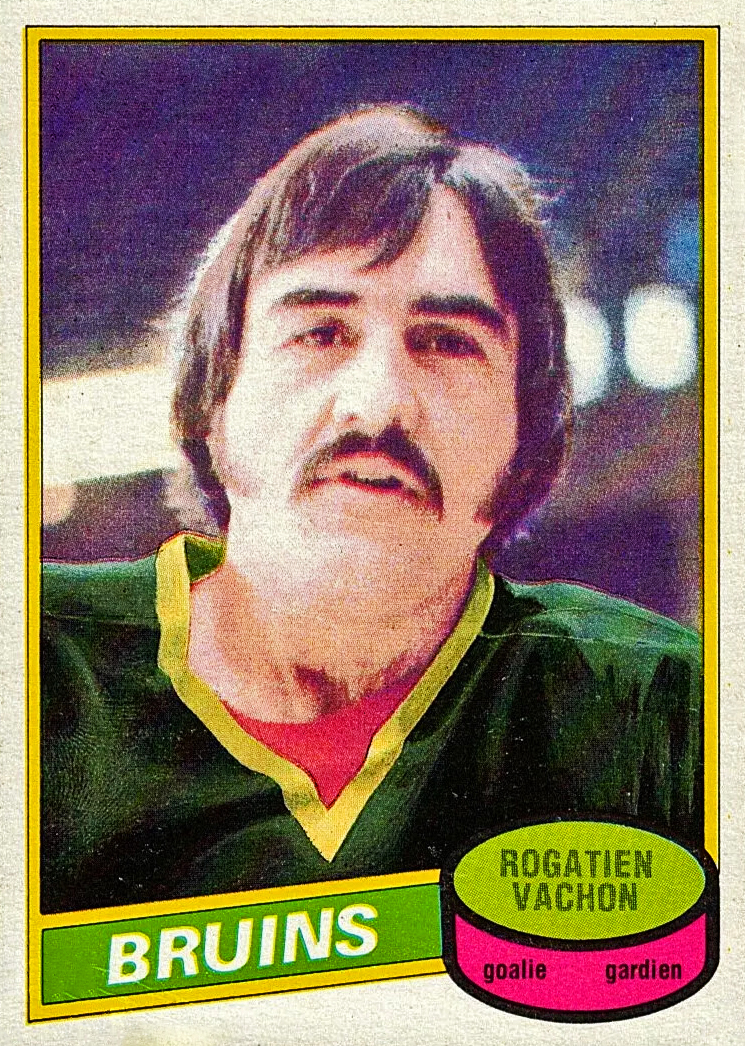
Image of the 1980-81 O-Pee-Chee 110 NHL hockey card featuring Rogie Vachon of the Boston Bruins.

The Philadelphia Flyers arrived at Boston Garden on November 16, 1980, riding a 13-game unbeaten streak. The Boston Bruins, meanwhile, had managed just four wins through their first 16 games. It hardly looked like the ideal matchup for a Boston breakthrough, but Rogie Vachon helped deliver one. Making his 10th appearance as a Bruin, the veteran goaltender stopped all 19 shots he faced to record his 50th career NHL shutout in a 1-0 victory.


Highlights

  • Vachon recorded his 50th NHL shutout on November 16, 1980.

  • Boston defeated Philadelphia 1-0 at Boston Garden.

  • The loss ended the Flyers’ 13-game unbeaten streak.

  • Brad Park scored the only goal at 9:35 of the second period.

  • Vachon made 19 saves; Phil Myre stopped 29 of 30 shots.

  • Vachon’s first NHL shutout came with Montreal on March 5, 1967.

  • He retired with 51 regular-season shutouts and entered the Hockey Hall of Fame in 2016.


More than 13 years had passed since Vachon’s first NHL shutout. On March 5, 1967, in just his eighth NHL appearance, he made 29 saves as the Montreal Canadiens defeated the New York Rangers 2-0. By the time he reached number 50, his career had taken him from Montreal to the Los Angeles Kings and Detroit Red Wings before bringing him to Boston.

Neither team scored through the opening period or the first half of the second. Finally, at 9:35 of the middle frame, Brad Park beat Philadelphia goaltender Phil Myre with a slapshot from the blue line. Stan Jonathan and Peter McNab earned the assists on what proved to be the game’s only goal.

Myre gave the Flyers every chance to extend their unbeaten streak, turning aside 29 of Boston’s 30 shots. At the other end, Vachon handled a lighter workload without allowing a breakthrough. Tom Gorence was Philadelphia’s busiest shooter, accounting for five of the Flyers’ 19 shots on net.

The milestone performance was Vachon’s only shutout in 53 appearances during the 1980-81 season. He added one more in 1981-82, his final NHL campaign, to finish with 51 regular-season shutouts, the same career total as Dave Kerr, Tomas Vokoun and Curtis Joseph. In 2016, Vachon’s long wait for another milestone ended when he was inducted into the Hockey Hall of Fame.

NHL Playoff Hat Tricks Of The 1960s cover

NHL Playoff Hat Tricks Of The 1960s

Relive the NHL playoff hat tricks of the 1960s with the stories, stars, and memorable performances behind some of the decade’s biggest postseason scoring nights.

Buy on Amazon
The PDF versions of some of our hockey books are now available for free download: Take a look!

Tuesday, September 15, 2026

Brad Park’s Final Bruins Goals Sink Sabres in 1983 Game 7

Brad Park saved his final two goals with the Boston Bruins for a night when neither could have mattered more. On April 24, 1983, the veteran defenceman scored the tying goal and overtime winner at Boston Garden, giving the Bruins a 3–2 victory over the Buffalo Sabres in Game 7 of the Adams Division Final. In his last season with Boston, Park delivered a performance that kept the Bruins’ Stanley Cup hopes alive.


Highlights

  • Boston defeated Buffalo 3–2 in Game 7 on April 24, 1983.

  • Ric Seiling scored twice to give the Sabres a 2–0 lead.

  • Barry Pederson started Boston’s comeback in the second period.

  • Brad Park tied the game at 9:21 of the second.

  • Park scored the series-winning goal at 1:52 of overtime.

  • He recorded eight points in the seven-game series.

  • These were his final two Bruins goals and final NHL playoff goals.


Buffalo had threatened to spoil the occasion. Ric Seiling scored twice to give the Sabres a 2–0 lead before Barry Pederson brought Boston within one at 6:32 of the second period. Park completed the comeback at 9:21, scoring with assists from Rick Middleton and Mike O’Connell. The Bruins had erased their deficit, but there was still a series to win.

Neither team scored in the third period, sending the deciding game into overtime. Just 1:52 into the extra session, Park beat Buffalo goaltender Bob Sauvé, with Pederson earning the assist. His second goal of the night broke both the 2–2 tie on the scoreboard and the 3–3 tie in the series, sending Boston into the Wales Conference Final.

At 34, Park remained a productive playoff performer. He finished the seven-game Buffalo series with three goals and five assists for eight points. The overtime winner was his third and final goal of the 1983 postseason. And, as it turned out, the last playoff goal of his NHL career.

The Gerry Cheevers coached Bruins next faced the New York Islanders, who ended Boston’s run in six games. Park contributed three assists, but the Islanders outscored the Bruins 30–21 before sweeping the Edmonton Oilers to capture their fourth consecutive Stanley Cup championship.

Park joined the Detroit Red Wings for the 1983–84 season and spent his final two NHL campaigns there. Detroit reached the playoffs both years but exited in the opening round each time. His Boston chapter had closed without a Stanley Cup, but his final two Bruins goals left a lasting memory: one to save Game 7, and another to win it.

Boston Bruins: Greatest Moments and Players book cover

Boston Bruins: Greatest Moments and Players

A celebration of the iconic history of the Boston Bruins — from legendary players to unforgettable moments.

Buy on Amazon
The PDF versions of some of our hockey books are now available for free download: Take a look!

Sunday, March 15, 2026

Normand Léveillé Breaks Out With Two Goals In His 4th NHL Game

The Boston Bruins selected Normand Léveillé 19th overall in the 1981 NHL Entry Draft after a dominant junior career with the Chicoutimi Sagueneens of the QMJHL. In his final season of junior hockey, Léveillé scored an impressive 55 goals, raising expectations that he could bring similar offensive production to the NHL.

His professional start, however, was quiet. Through his first three NHL games of the 1981-82 season, the rookie winger was held off the scoresheet. That changed dramatically in his fourth game when the Bruins traveled to Chicago Stadium on October 14, 1981 to face the Chicago Blackhawks.

Léveillé wasted no time making an impact. Just 36 seconds into the game, he scored his first NHL goal by beating Blackhawks goaltender Murray Bannerman. The historic tally was assisted by Bruins captain Terry O'Reilly and forward Tom Fergus.

The rookie struck again late in the second period. At 18:45, Léveillé scored his second goal of the night, this time assisted by veteran defenseman Brad Park. The goal gave Boston a 6-5 lead and ultimately stood as the game-winner in an entertaining 8-5 Bruins victory. Léveillé finished the game with five shots on Bannerman.

Léveillé completed his rookie season with 14 goals and 19 assists for 33 points in 66 games. He appeared poised for an even bigger role the following year, starting the 1982-83 season at nearly a point-per-game pace. Tragically, his promising career was cut short when he suffered a career-ending brain aneurysm during a game at Pacific Coliseum against the Vancouver Canucks in just the ninth game of the season.

Boston Bruins: Greatest Moments and Players book cover

Boston Bruins: Greatest Moments and Players

A celebration of the iconic history of the Boston Bruins — from legendary players to unforgettable moments.

Buy on Amazon
The PDF versions of some of our hockey books are now available for free download: Take a look!

Tuesday, July 22, 2014

10 NHL Stars That Shunned The WHA


bobby clarke philadelphia flyers 1977-78 o-pee-chee
The World Hockey Association was a rebel hockey league that existed from 1972 to 1979 to compete against the National Hockey League. In the inaugural WHA draft, many NHL stars were selected by the original 12 WHA teams and many of these players were in their prime as stars in hockey.

The original World Hockey Association General Player Draft was held on February 12 and 13 of 1972. Although the draft lasted 123 rounds, the first round or preliminary round played the most important role in attempting to secure superstar talent away from the National Hockey League. In that preliminary round, each of the twelve proposed franchises wrote down four players, secret ballot style, and submitted them.

Of the names selected in that preliminary round, few would play a single game in the WHA. The following players that declined and stayed in the NHL would have changed the history of professional hockey if they’d made a different decision.

Stan Mikita – Chicago Cougars


Stan Mikita was selected by the Chicago Cougars. Chicago Black Hawks legend and Hockey Hall of Famer played 22 seasons in the National Hockey League, all with the Blackhawks. The year he retired from the NHL was the year the WHA and NHL merged, 1979-80.  Stan was inducted into the Hockey Hall of Fame in 1983.

Bobby Clarke – Alberta Oilers


In February of 1972, Bobby Clarke was just coming into his own with the Philadelphia Flyers. Two years later, Clarke captained the Flyers to their first of two consecutive Stanley Cup victories. Clarke was inducted into the Hockey Hall of Fame in 1987 and might well have been a member of the Alberta Oilers if the offer was right in 1972. Would that one move have had the butterfly effect enough to keep both the Flyers and Oilers from Stanley Cup championships over the next decade and a half?

Ken Dryden – Los Angeles Sharks


Ken Dryden already had one Stanley Cup and the Calder Trophy under his belt when he was drafted by the Los Angeles Sharks of the WHA. In what could have been his first season with Los Angeles, Dryden won his second of six Stanley Cup championships he would win with the Montreal Canadiens. Dryden entered the Hockey Hall of Fame in 1983.

Gilbert Perreault – Los Angeles Sharks


Gilbert Perreault was in his second season of his Hall of Fame career with the Buffalo Sabres when the Los Angeles Sharks selected him in the preliminary round. Perreault played seventeen seasons in the NHL, all with the Sabres. The closest Gilbert came to a Stanley Cup ring was when Buffalo fell to the Flyers in the 1974-75 final. He was inducted into the Hall of Fame in 1990.

Peter Mahovlich – Minnesota Fighting Saints


With his size, toughness and scoring ability, Peter Mahovlich would have been the leader of the Minnesota Fighting Saints. Mahovlich remained with the NHL’s Montreal Canadiens where he was part of four Stanley Cup winning teams. In all, Peter played nearly 900 NHL regular season games with the Detroit Red Wings, Montreal Canadiens and Pittsburgh Penguins. If he had jumped to the WHA, he wouldn’t have been able to play in the historic 1972 Summit Series for Team Canada. However, his brother Frank Mahovlich did choose the WHA route, playing 237 regular season games between 1974-75 and 1977-78 with the Toronto Toros and Birmingham Bulls.

Steve Shutt – New York Raiders


Steve Shutt was drafted by the WHA’s New York Raiders right out of the OHA’s Toronto Marlboros. Shutt chose to take his chances with the powerful Montreal Canadiens and despite the odds, he played in 50 games with the Habs in his rookie NHL season, 1972-73. The following year, he was a regular with the club. A 60 goal scorer in 1976-77, Shutt was a part of five Stanley Cup winning teams with Montreal and was inducted into the Hockey Hall of Fame in 1993. He appeared in 930 regular season games in the NHL between 1972-73 and 1984-85 with the Canadiens and Los Angeles Kings.

Brad Park – Ottawa Nationals


Already established as one of the NHL’s top defenseman, Brad Park chose to stay with the New York Rangers instead of jumping ship to the WHA’s Ottawa Nationals. Park enjoyed a long NHL career with the Rangers, Boston Bruins and Detroit Red Wings before his induction to the Hockey Hall of Fame in 1988. Considering Ottawa’s instability and short-lived stay in the WHA, it was a good move on Brad’s part.

Eddie Shack – Ottawa Nationals


Eddie Shack was nearing the end of his interesting NHL career when the Ottawa Nationals selected him. One has to wonder what Eddie Shack would have become in the WHA. Perhaps, Shack would have finally been able to showcase his offensive talents. A veteran of 1,047 regular season games in the National Hockey League, Shack played for the New York Rangers, Toronto Maple Leafs, Boston Bruins, Los Angeles Kings, Buffalo Sabres and Pittsburgh Penguins between 1958-59 and 1974-75.

Jacques Lemaire – Quebec Nordiques


Jacques Lemaire finished his NHL career with his name engraved on the Stanley Cup eight times as a player, all with the Montreal Canadiens. When the Quebec Nordiques selected him in the WHA draft, Lemaire already had three of those Stanley Cups under his belt. Despite having a 1974-75 hockey card depicting him as a member of the Buffalo Sabres, Lemaire played his entire NHL career with the Habs, appearing in 853 regular season games between 1967-68 and 1978-79. Jacques was elected to the Hockey Hall of Fame in 1984. He won another Stanley Cup in 1995 as the head coach of the New Jersey Devils.

Guy Lapointe – Quebec Nordiques


Guy Lapointe won six Stanley Cups with the Montreal Canadiens and was inducted into the Hockey Hall of Fame in 1993. Lapointe, like his long time teammate Jacques Lemaire, was selected by the Quebec Nordiques but never played in the World Hockey Association. Guy appeared in 894 regular season NHL games between 1968-69 and 1983-84 with the Canadiens, St. Louis Blues and Boston Bruins.

What would have happened if even half of these players had joined Bobby Hull, Bernie Parent, Norm Ullman and Derek Sanderson in pioneering hockey history in the WHA? The league certainly would have competed better with the NHL from the beginning. Perhaps, earlier merger plans that the WHA had with the NHL would have gone through with the Houston Aeros and Cincinnati Stingers surviving extinction and becoming NHL clubs along with the Edmonton Oilers, New England Whalers, Quebec Nordiques and Winnipeg Jets. Or, perhaps, the WHA would still be in existence, living in conjunction with a smaller, weaker NHL.