Saturday, May 2, 2026

Gordie Howe Dominates: Involved in All 5 Red Wings Goals in 1953 Win

gordie howe detroit red wings 1952-53 parkhurst 88 nhl hockey card

Few players in NHL history have ever controlled a game quite like Gordie Howe did during the 1952-53 season. While his career would stretch into four decades, it was that remarkable year when “Mr. Hockey” reached his offensive peak, finishing with 49 goals, just one shy of joining Maurice Richard and Bernie Geoffrion as the only 50-goal scorers in NHL history at the time. Howe still led the league and captured both the Art Ross Trophy and the Hart Trophy.


Highlights

  • Gordie Howe recorded 5 points (2 goals, 3 assists)

  • Involved in all 5 Detroit Red Wings goals

  • Multiple points on a single power play

  • Game played February 1, 1953

  • Red Wings defeated Maple Leafs 5–1

  • Part of Howe’s 49-goal MVP season   


One unforgettable performance came on February 1, 1953, at Detroit Olympia, when the Detroit Red Wings faced the Toronto Maple Leafs. Detroit cruised to a 5-1 victory, but the real story was Howe’s complete dominance. He played a role in every single Red Wings goal.

Howe opened the scoring at 5:24 of the first period, netting his 36th goal of the season against goaltender Harry Lumley, with assists from Red Kelly and Jim Hay. Just 45 seconds later, Howe turned playmaker, setting up Alex Delvecchio for what would stand as the game-winning goal.

Remarkably, both goals came on the same power play, with Tim Horton serving a penalty. In that era, penalties were served in full regardless of goals scored, allowing Howe and the Red Wings to fully capitalize. Before the advantage expired, Howe assisted again, this time on a goal by Marcel Pronovost, giving Detroit a commanding 3-0 lead.

The second period brought more of the same brilliance. Howe scored another power-play goal, assisted by Kelly and Ted Lindsay, extending the lead to 4-1. Less than a minute later, he added his third assist of the night, helping Delvecchio notch his second goal and seal the 5-1 final.

When the dust settled, Howe had recorded five points, two goals and three assists, while factoring into every Detroit tally. It was a performance that perfectly captured why he remains one of hockey’s greatest icons: skill, vision, and complete control of the game in every situation.

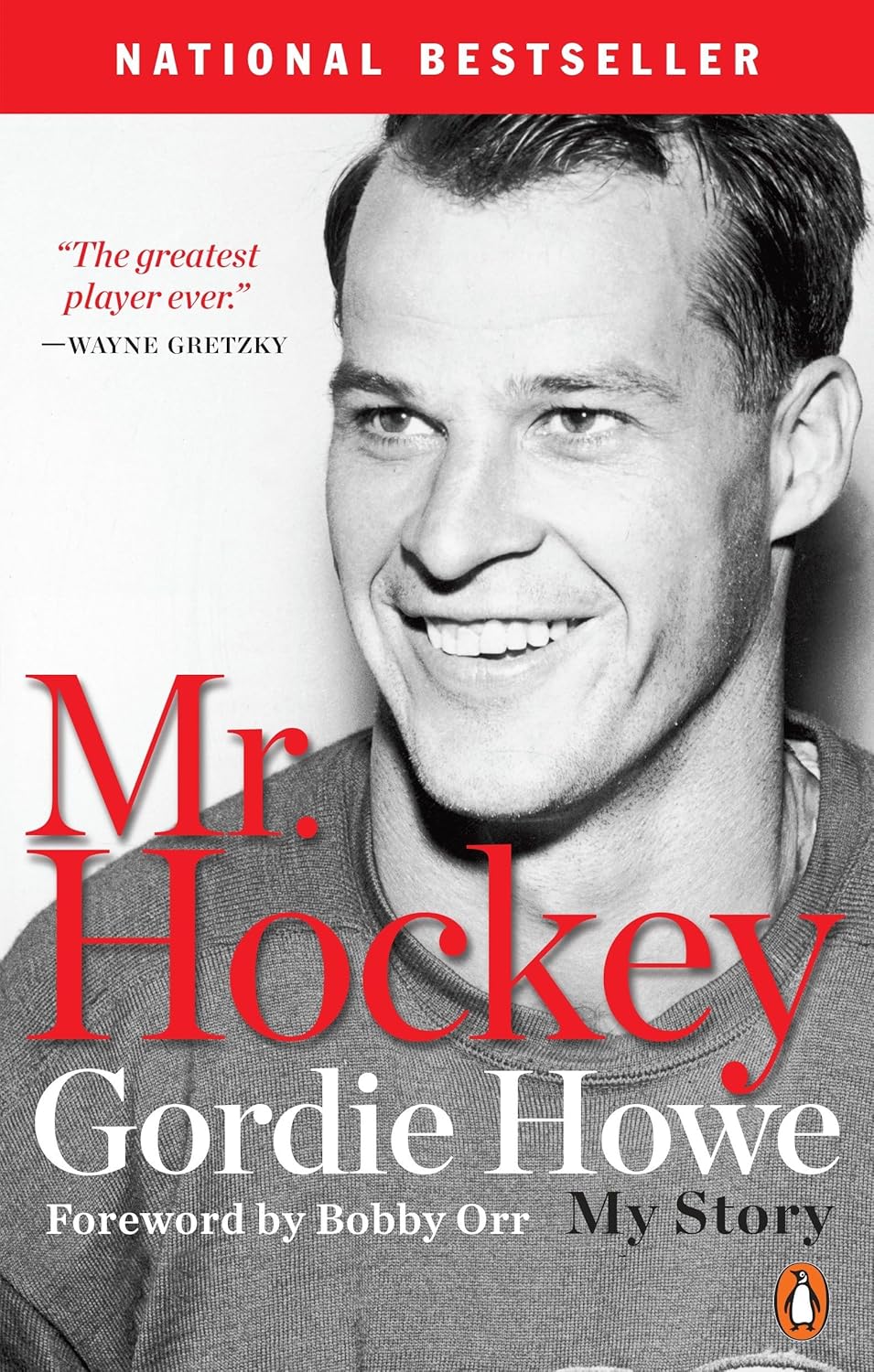
Mr. Hockey: The Autobiography of Gordie Howe cover

Mr. Hockey: The Autobiography of Gordie Howe

The definitive autobiography of Gordie Howe, one of hockey’s greatest players and a true legend of the game.

Buy on Amazon
The PDF versions of some of our hockey books are now available for free download: Take a look!

Friday, May 1, 2026

Gilbert Perreault’s 7-Point Explosion Still Stands as a Buffalo Sabres Record

1975-76 o-pee-chee 10 nhl hockey card gilbert perreault buffalo sabres

On February 1, 1976, Gilbert Perreault delivered one of the most electrifying performances in Buffalo Sabres history, one that still hasn’t been matched. In a high-scoring showdown against the California Golden Seals, Perreault piled up an incredible seven points, setting a franchise record that remains untouched decades later.


Highlights

  • Gilbert Perreault records 7 points in one game (Sabres franchise record)

  • Performance came in a 9-5 win over the California Golden Seals

  • Danny Gare scores a hat trick (10 shots on goal)

  • Rene Robert contributes 5 points in the same game

  • Perreault records 2 goals and 5 assists

  • All Sabres goals scored against Gary Simmons

  • Game featured 14 total goals between both teams

  • Part of Perreault’s 113-point career season in 1975-76


The game, played at the Oakland-Alameda County Coliseum Arena, ended in a wild 9-5 Sabres victory. While teammates Danny Gare (hat trick) and Rene Robert (five points) had standout nights of their own, they were ultimately overshadowed by Perreault’s dominant performance.

Buffalo got on the board early with Robert scoring the lone goal of the first period, assisted by Perreault and Jocelyn Guevremont. The second period saw the offense erupt, with the Sabres netting four goals. Perreault contributed with assists on goals by Gare and Jacques Richard, helping Buffalo seize control of the game.

The third period belonged entirely to Perreault. He assisted on two more Gare goals, including one with just four seconds left, while also scoring twice himself, bringing his season totals to 28 and 29 goals. All nine Sabres goals came against goaltender Gary Simmons, who faced relentless pressure throughout the night.

Perreault’s seven-point outing stands as the pinnacle of a remarkable career that included multiple six-point games. During the 1975-76 season, he posted a career-best 44 goals and 113 points. Surprisingly, despite such dominance, he finished tied for just seventh in Hart Trophy voting alongside Pete Mahovlich of the Montreal Canadiens.

“Then Perreault Said to Rico…”: The Best Buffalo Sabres Stories Ever Told cover

"Then Perreault Said to Rico…": The Best Buffalo Sabres Stories Ever Told

A collection of the greatest Buffalo Sabres tales — from unforgettable moments to iconic personalities in franchise history.

Buy on Amazon
The PDF versions of some of our hockey books are now available for free download: Take a look!

Wednesday, April 29, 2026

Johnny Bucyk and Bob Perreault Spark Bruins Upset Over Canadiens in 1962-63 Opener

The gap between the Montreal Canadiens and Boston Bruins couldn’t have been wider heading into the 1962-63 NHL season. Montreal had just finished atop the standings with 42 wins and 98 points in 1961-62, while Boston languished in last place with only 15 victories. On paper, the season opener looked like a mismatch. On the ice, it told a very different story.


Highlights

  • Bruins stunned Canadiens 5-0 in 1962-63 season opener

  • Johnny Bucyk scored twice and added an assist

  • Bucyk’s opening goal came just 4:23 into the first period

  • Doug Mohns recorded 2 goals and 1 assist

  • Bob Perreault made 28 saves for a shutout in his 10th NHL game

  • Game played at Boston Garden on October 11, 1962

  • Bruins won just 1 of their first 17 games after opener

  • Boston finished season with only 14 wins despite hot start


On October 11, 1962, at Boston Garden, the Bruins stunned the hockey world with a dominant 5-0 victory. Johnny Bucyk wasted no time setting the tone, scoring the game-winning goal just 4:23 into the first period against legendary goaltender Jacques Plante. Bucyk added another goal later in the game and chipped in an assist, finishing with a three-point performance that energized the home crowd.

Boston’s offensive push didn’t stop there. Doug Mohns delivered a standout performance of his own, recording two goals and an assist. Contributions from players like Wayne Connelly and Murray Oliver helped round out a relentless Bruins attack that overwhelmed Montreal from start to finish.

In goal, Bob Perreault authored one of the most surprising performances of the night. Appearing in just his tenth NHL game, and his first since the 1958-59 season, Perreault turned aside all 28 shots he faced to secure the shutout. Though his NHL career was brief, he built a remarkable legacy in the minors, capturing four Calder Cup championships in the AHL and another title with the San Francisco Seals in the WHL.

As memorable as the victory was, it proved to be a rare bright spot for Boston that season. The Bruins would go on to win just one of their first 17 games and finished the 1962-63 campaign with only 14 victories, one fewer than the previous year. Against Montreal, Boston managed just two wins in 14 meetings, including a narrow 2-1 triumph on Valentine’s Day, underscoring how fleeting that opening-night magic truly was.

Boston Bruins: Greatest Moments and Players book cover

Boston Bruins: Greatest Moments and Players

A celebration of the iconic history of the Boston Bruins — from legendary players to unforgettable moments.

Buy on Amazon
The PDF versions of some of our hockey books are now available for free download: Take a look!

Tuesday, April 28, 2026

Stan Mikita’s OT Heroics Spark Chicago’s Final Playoff Win Before Historic Losing Streak

stan mikita chicago blackhawks 1974-75 o-pee-chee 20 nhl hockey card

On April 17, 1975, at Chicago Stadium, Stan Mikita delivered a clutch overtime performance that would unknowingly mark the end of an era for the Chicago Blackhawks. Facing the Buffalo Sabres in Game 3 of their quarter-final series, the Blackhawks were already down 2-0 and fighting to stay alive in the 1974-75 Stanley Cup Playoffs.


Highlights

  • Stan Mikita scored the overtime winner in Game 3 on April 17, 1975

  • Chicago defeated Buffalo 5-4 for their only win of the series

  • Mikita had a 3-point game (1 goal, 2 assists)

  • The Blackhawks were already down 2-0 in the series at the time

  • Chicago lost the next two games and was eliminated

  • That victory became their last playoff win for nearly 5 years

  • The team went on to lose 16 straight playoff games (NHL record)

  • The streak finally ended on April 8, 1980, with an OT goal by Doug Lecuyer   


Chicago controlled much of the game but couldn’t shake Buffalo. Holding a 4-3 lead after two periods, the Blackhawks saw their advantage disappear when Jim Schoenfeld tied the game midway through the third. With momentum hanging in the balance, the game headed into sudden-death overtime.

Just 2:31 into the extra frame, Mikita stepped up in vintage fashion. Scoring his third goal of the playoffs, he beat Gerry Desjardins with a perfectly timed finish, assisted by Cliff Koroll and Dick Redmond. Mikita’s overtime winner capped off a dominant three-point performance, as he also assisted on earlier goals by Redmond and Koroll.

What no one could have predicted at the time was the historical weight of that goal. Chicago would go on to lose the next two games and the series, and that victory would stand as their last playoff win for nearly five years. The Blackhawks then endured a staggering 16-game postseason losing streak, a record that still stands in NHL history.

Despite the drought, Chicago continued to qualify for the playoffs each year, only to fall short repeatedly. They were swept by the Montreal Canadiens in 1976, eliminated quickly by the New York Islanders in 1977, pushed but lost to Boston in 1978, and swept again by the Islanders in 1979.

The streak finally ended on April 8, 1980, when Doug Lecuyer scored an overtime winner against Mike Liut. Though Mikita had retired by then, Tony Esposito was a constant presence in both the 1975 victory and the 1980 breakthrough, a rare bridge between two vastly different moments in Blackhawks playoff history.

Forever a Blackhawk – Stan Mikita book cover

Forever a Blackhawk

A tribute to Stan Mikita — one of the greatest Chicago Blackhawks of all time and a Hall of Famer.

Buy on Amazon
The PDF versions of some of our hockey books are now available for free download: Take a look!

Monday, April 27, 2026

Paul Henderson Explodes for 5 Points in Red Wings Comeback Win

paul henderson detroit red wings 1966-67 topps 46 nhl hockey card

On October 27, 1966, the Detroit Red Wings hosted the New York Rangers at Detroit Olympia, still searching for their first win of the young 1966-67 season. After dropping their first four games, frustration was building, until Paul Henderson delivered a performance for the ages.


Game Highlights

  • Paul Henderson records 4 goals and 5 points

  • First of four career NHL hat tricks for Henderson

  • Red Wings earn first win after 0-4 start

  • Detroit rallies from 2-0 deficit

  • Henderson scores natural hat trick in second period

  • Henderson & Norm Ullman combine for 9 points

  • Gordie Howe and Alex Delvecchio held pointless

  • High-scoring battle ends in 5-4 Detroit victory


The game didn’t start in Detroit’s favour. The Rangers jumped out to a 2-0 lead thanks to goals from Bernie Geoffrion and Don Marshall, putting the Red Wings on the brink of a fifth straight loss. But momentum began to shift midway through the second period when Norm Ullman got Detroit on the board, finishing a play set up by Henderson.

Just 31 seconds later, Henderson struck for his first goal of the night, assisted by Ullman and Gary Bergman, igniting the home crowd and completely flipping the script. From there, Henderson took over.

He completed a natural hat trick with more than five minutes remaining in the second period, turning a 2-0 deficit into a Red Wings lead in stunning fashion. Although Marshall added another for New York just before the period ended to keep things tight, Henderson wasn’t finished.

At 12:55 of the third period, Henderson scored his fourth goal of the game, his fifth point overall, to seal the victory for Detroit. It was a dominant individual effort that powered the Red Wings to a much-needed 5-4 win.

Henderson and Ullman were unstoppable together, combining for five goals and four assists while accounting for 13 of Detroit’s 49 shots on Ed Giacomin. Remarkably, legends Gordie Howe and Alex Delvecchio were held off the scoresheet entirely.

Despite the loss, the Rangers saw strong production from their own stars. The trio of Geoffrion, Marshall, and Phil Goyette, all former Montreal Canadiens, combined for eight points in a game that showcased offensive firepower on both sides.

1972: The Series That Changed Hockey Forever cover

1972: The Series That Changed Hockey Forever

A compelling look at the iconic 1972 Summit Series — how it reshaped international hockey and captivated fans around the world.

Buy on Amazon
The PDF versions of some of our hockey books are now available for free download: Take a look!

Thursday, April 23, 2026

Bobby Hull’s Lone Hat Trick Highlights Blackhawks’ 1960-61 Cup Season

bobby hull chicago blackhawks 1960-61 topps 58 nhl hockey card

During the 1960-61 NHL season, the Chicago Blackhawks achieved the ultimate goal, winning the Stanley Cup. But surprisingly, offensive fireworks were not a regular occurrence.

Across the entire league, 21 hat tricks were recorded that year. The Blackhawks accounted for just one of them. Despite finishing third overall in the six-team NHL and placing fourth in goals scored, Chicago relied heavily on elite goaltending and structured defensive play rather than high-powered offense.


Highlights

  • Chicago recorded just one hat trick during the 1960–61 season
  • The Blackhawks still went on to win the Stanley Cup
  • Bobby Hull scored all three goals in a 3–2 win over the Rangers
  • Hull fired 13 shots on goal in the game
  • Two of his goals came on the power play
  • The hat trick included the game-winning goal late in the third
  • Hull followed it up by factoring in all goals in a 3–0 shutout win
  • Chicago relied more on defense and goaltending than offense

The Golden Jet Takes Over At Chicago Stadium

That lone hat trick came early in the season and it belonged to a rising superstar.

On October 9, 1960, at Chicago Stadium, Bobby Hull delivered a dominant performance, scoring all three goals in a 3-2 victory over the New York Rangers. Hull was a one-man offensive engine, firing 13 of Chicago’s 38 shots on goal against Rangers netminder Gump Worsley.

Hull opened the scoring late in the first period with a power-play goal, assisted by Bill Hay and Murray Balfour. The timing was especially painful for New York, as Andy Hebenton was just seconds away from exiting the penalty box.


Clutch Goals Seal The Comeback

The Rangers responded by taking a 2-1 lead into the third period on goals from Harry Howell and Brian Cullen. But the final frame belonged entirely to Hull.

Just 2:53 into the period, he struck again on the power play to tie the game, with assists from Ed Litzenberger and Moose Vasko. Once again, the Rangers were on the verge of killing the penalty before Hull capitalized.

Then, at 16:08, Hull completed the hat trick, scoring the game-winning goal with help from Bill “Red” Hay.


Hull Stays Red Hot

Hull didn’t slow down after his standout performance.

In the very next game, a 3-0 shutout win over the Toronto Maple Leafs, he factored into every Chicago goal. Hull assisted on Dollard St. Laurent’s game-winner, scored an insurance goal, and added another assist on Murray Balfour’s first goal of the season.

The Golden Jet: A Spectacular Career In Stunning Photographs cover

The Golden Jet: A Spectacular Career In Stunning Photographs

A visually rich tribute to Bobby Hull’s legendary career, featuring stunning photographs that capture the speed, power, and charisma of one of hockey’s greatest goal scorers.

Buy on Amazon
The PDF versions of some of our hockey books are now available for free download: Take a look!

Wednesday, April 22, 2026

Bobby Orr Dominates as Bruins Crush Kings 11-2 in Boston Blowout

bobby orr boston bruins 1971-72 o-pee-chee 100 nhl hockey cards

On November 14, 1971, the Boston Bruins delivered a ruthless performance at Boston Garden, overwhelming the Los Angeles Kings by a staggering 11-2 score. The Kings entered the matchup struggling, with just three wins in their first 16 games of the 1971-72 season and things only spiraled further once the puck dropped.


Key Highlights

  • Bobby Orr records 6 points, including a hat trick
  • Bruins score 11 unanswered goals after early deficit
  • Phil Esposito posts 5-point night (2G, 3A)
  • Ed Westfall adds 4 points (1G, 3A)
  • Boston dominates with 35 shots on goal
  • Kings struggle continues with lopsided loss
  • Gary Edwards faces full game in net under heavy pressure

Los Angeles briefly held the lead after Eddie Joyal opened the scoring just over two minutes into the first period. But that early goal quickly became a footnote. Boston responded with relentless offense, turning the game into a one-sided showcase of firepower and precision.

At the center of it all was Bobby Orr, who delivered a masterclass performance with six points, two in each period. He began by assisting on Phil Esposito’s goal before scoring one of his own later in the first. Orr struck again early in the second period, then added another assist before closing out his night in style with a third-period hat trick goal.

The offensive explosion didn’t stop there. Esposito finished with five points (two goals, three assists), while Ed Westfall contributed four points with a goal and three assists. Mike Walton also found the scoresheet as Boston piled on. Orr was especially aggressive, leading all players with eight of the Bruins’ 35 shots on goal.

Despite facing a barrage all night, Kings goaltender Gary Edwards remained in net for the full 60 minutes, a tough assignment against one of the most dominant teams of the era. By the final horn, the Bruins had turned a brief early deficit into a commanding and unforgettable rout.

Bobby: My Story in Pictures cover

Bobby: My Story in Pictures

A visual celebration of Bobby Orr’s groundbreaking career — through photos and memorable moments.

Buy on Amazon
The PDF versions of some of our hockey books are now available for free download: Take a look!

Tuesday, April 21, 2026

Two Goals, One Penalty Kill: Detroit’s 14-Second Shocker vs. Bruins in 1958

On December 28, 1958, at Detroit Olympia, the Detroit Red Wings pulled off one of the most stunning penalty-kill moments in NHL history against the Boston Bruins. What began as a promising night for Boston quickly turned into a nightmare, all within the span of just 14 seconds.


🏒 Key Highlights

  • December 28, 1958 matchup between Detroit Red Wings and Boston Bruins
  • Bruins strike first, but momentum shifts after a Gordie Howe penalty
  • Alex Delvecchio ties the game with a shorthanded goal
  • Nick Mickoski scores another SHG just 14 seconds later
  • Two shorthanded goals on the same penalty kill (extremely rare)
  • Delvecchio dominates with a four-point performance (1G, 3A)
  • Red Wings build a 5-1 lead before a late Bruins push
  • Detroit secures a 5-3 victory after the dramatic turnaround

The Bruins struck first when former (and future) Red Wing Vic Stasiuk opened the scoring at 5:48 of the first period. Momentum appeared to stay on Boston’s side when Gordie Howe took an interference penalty shortly after. With a power play opportunity to extend their lead, the Bruins instead found themselves on the wrong end of a dramatic momentum swing.

Alex Delvecchio flipped the game on its head, scoring an unassisted shorthanded goal, his 11th of the 1958–59 season, to tie the game. Before Boston could even reset, disaster struck again. Just 14 seconds later, Nick Mickoski buried another shorthanded goal, assisted by Delvecchio and Marcel Pronovost, giving Detroit a stunning lead while still killing the same penalty.

That burst proved to be the turning point. The Red Wings took control, building a commanding 5-1 lead in the third period with additional goals from Howe, Charlie Burns, and Claude Laforge. The Bruins mounted a late push with goals from Fleming Mackell and Leo Labine, but the damage had already been done. Detroit held on for a 5-3 victory.

Delvecchio finished the night with a dominant four-point performance (one goal, three assists), showcasing his all-around brilliance. During the 1958-59 season, he recorded two shorthanded goals and would go on to total 15 in his career, including a league-leading four in 1965-66. Mickoski’s goal was his only point of the game, but it contributed to a season where he scored three shorthanded goals, half of his career total of six.

The Franchise: Detroit Red Wings: A Curated History of Hockeytown book cover

The Franchise: Detroit Red Wings: A Curated History of Hockeytown

Explore the storied history of the Detroit Red Wings — legends, moments, rivalries, and the culture that made Hockeytown iconic.

Buy on Amazon
The PDF versions of some of our hockey books are now available for free download: Take a look!

Monday, April 20, 2026

Pete Stemkowski: A Gordie Howe Hat Trick Beside Mr. Hockey Himself (1968)

When the Toronto Maple Leafs and Detroit Red Wings pulled off a blockbuster trade on March 3, 1968, it reshaped both franchises. Heading to Detroit was Pete Stemkowski, along with Carl Brewer, Frank Mahovlich, and Garry Unger. In return, Toronto received Paul Henderson, Norm Ullman, Floyd Smith, and Doug Barrie.

  • Massive March 3, 1968 trade sends Pete Stemkowski from Toronto to Detroit
  • Game played at Detroit Olympia early in the 1968–69 NHL season
  • Stemkowski records an assist on Gary Bergman’s first-period goal
  • Drops the gloves with rugged forward Reg Fleming just 44 seconds later
  • Adds another assist on Alex Delvecchio’s game-tying goal
  • Scores his first goal of the season in the third period
  • Completes a Gordie Howe Hat Trick (goal, assist, fight)
  • Shares the ice with Gordie Howe during the milestone performance
  • Finishes the season with a career-high 21 goals
  • Goes on to record five 20+ goal seasons in his NHL career

Stemkowski finished the 1967-68 season with Detroit, but it was clear early in the following year that he was ready to elevate his game. Just three games into the 1968-69 season, the Red Wings hosted the New York Rangers at the historic Detroit Olympia and Stemkowski made sure his presence was felt.

The Rangers had to contend with more than one “Big Pete” that night. Pete Mahovlich contributed a goal and an assist, but the spotlight belonged to Stemkowski. Late in the first period, he set up Gary Bergman for the game’s opening goal against goaltender Ed Giacomin. Moments later, the intensity ramped up when Stemkowski dropped the gloves with tough guy Reg Fleming, earning five minutes for fighting in a spirited exchange.

After Bob Nevin scored twice to give New York the lead, Stemkowski answered again, this time setting up Alex Delvecchio to tie the game in the second period. By the third, with Detroit in control, Stemkowski capped his performance with his first goal of the season, assisted by Delvecchio and Bruce MacGregor.

The result? A classic Gordie Howe Hat Trick, a goal, an assist, and a fight, all while sharing the ice with Gordie Howe himself. Howe had a quieter night with a single assist, but the performance from Stemkowski showed he was ready to make his mark in Detroit.

That season, Stemkowski scored 21 goals, surpassing his previous career high of 13 set with Toronto in 1966-67. It was just the beginning of a productive stretch, as he would go on to record five 20-goal seasons in his NHL career, two with Detroit and three later with the Rangers.

The Franchise: Detroit Red Wings: A Curated History of Hockeytown book cover

The Franchise: Detroit Red Wings: A Curated History of Hockeytown

Explore the storied history of the Detroit Red Wings — legends, moments, rivalries, and the culture that made Hockeytown iconic.

Buy on Amazon
The PDF versions of some of our hockey books are now available for free download: Take a look!

Friday, April 17, 2026

Rod Gilbert’s 4-Goal Night Wasted As Rangers Blow Lead In Wild 5-5 Tie With Red Wings

It should have been a signature win at Madison Square Garden, but instead, it became one of the most frustrating nights of the season for New York Rangers fans.

Game Highlights

  • Rod Gilbert explodes for 4 goals — goals #26, 27, 28, and 29 on the season
  • Rangers jump out to 4-0 lead early in the second period
  • Detroit scores 4 unanswered goals to tie the game 4-4
  • Gilbert restores the lead with his fourth goal early in the third
  • Bill Hogaboam responds 46 seconds later to force a 5-5 tie
  • Jim Rutherford makes 44 saves, including 11 against Gilbert
  • Jean Ratelle, Dale Rolfe, Steve Vickers each record 2 assists
  • Hank Nowak drops the gloves twice and adds an assist
  • Final Score: Rangers 5, Red Wings 5

On February 2, 1975, the Rangers hosted the struggling Detroit Red Wings, a club that had managed just 13 wins through their first 50 games. Meanwhile, New York had been one of the league’s stronger teams, losing only 15 times over that same stretch. Everything pointed toward a comfortable Rangers victory, especially when Rod Gilbert caught fire early.

Gilbert struck twice in the opening period, beating Jim Rutherford for his 26th and 27th goals of the season. Combined with a marker from Jerry Butler, the Rangers jumped out to a commanding 3-0 lead. Early in the second period, Gilbert completed his hat trick, scoring his 28th of the year to extend the lead to 4-0, and it looked like the rout was on.

But the game took a dramatic turn.

The Red Wings stormed back with four unanswered goals, stunning the home crowd and tying the game 4-4 heading into the third period. Despite the collapse, Gilbert wasn’t finished. He scored his fourth goal of the night, his 29th of the season, just over five minutes into the final frame to restore New York’s lead.

Unfortunately for the Rangers, the advantage lasted less than a minute.

Bill Hogaboam answered just 46 seconds later with his second goal of the game, sealing a chaotic 5-5 tie. Hogaboam also added an assist, finishing with a three-point night to lead Detroit’s unlikely comeback.

Rutherford stood tall under heavy pressure, stopping 44 of 49 shots, including 11 from Gilbert alone, while Gilles Villemure made 20 saves for New York. Jean Ratelle, Dale Rolfe, and Steve Vickers each chipped in with two assists in the high-scoring affair.

The game also featured plenty of physical play, highlighted by Hank Nowak dropping the gloves twice, once with Ron Greschner in the first period and again with Bert Wilson in the third. Nowak also contributed offensively with an assist on a goal by Pierre Jarry.

In the end, despite one of the greatest individual performances of his career, Gilbert’s four-goal night wasn’t enough. Instead of a decisive win, the Rangers were left wondering how a dominant 4-0 lead slipped away on home ice.

Tales from the New York Rangers Locker Room cover

Tales from the New York Rangers Locker Room

A collection of the greatest Rangers stories ever told — insider tales featuring legends past and present.

Buy on Amazon
The PDF versions of some of our hockey books are now available for free download: Take a look!

Thursday, April 16, 2026

He Needed Just 19 Seconds: Ted Irvine’s Record-Breaking OT Winner

ted irvine los angeles kings 1968-69 o-pee-chee 39 nhl hockey card

The 1968-69 opening-round playoff series between the Los Angeles Kings and the Oakland Seals was as tight as they come, stretching the full seven games. Despite advancing, the Kings were actually outscored 25-23 over the series. Oddly enough, only one game required overtime and it happened right at the very beginning.

Quick Facts

  • 📅 Date: April 2, 1969
  • 🏒 Game: Kings vs. Seals (Game 1, Quarterfinal)
  • ⚡ Overtime Winner: Ted Irvine (0:19)
  • 🏆 Record: Fastest OT goal in NHL history (at the time)
  • 🔁 Previous Record: Syd Howe (0:25, 1940)
  • 🔥 Current Record: Brian Skrudland (0:09, 1986)

Game 1, played on April 2, 1969 at the Oakland-Alameda County Coliseum Arena, set the tone early. The Seals carried a 2-1 lead after the first period and held a slim 3–2 edge heading into the third. But the Kings clawed back, with Eddie Joyal scoring twice to flip the game in Los Angeles’ favor at 4-3.

Oakland refused to go quietly. Late in regulation, Gene Ubriaco found the back of the net at 17:22 of the third period, knotting the score at 4-4 and sending the game into sudden-death overtime.

It didn’t take long to settle things. Just 19 seconds into the extra frame, Ted Irvine beat goaltender Gary Smith, with help from Jimmy Peters. The lightning-fast goal set a new NHL record for the quickest overtime tally in league history at the time.

The previous mark had stood for nearly three decades. On March 19, 1940, Syd Howe scored just 25 seconds into overtime for the Detroit Red Wings in a win over the New York Americans.

While Irvine’s record didn’t last forever, it remains a remarkable moment in playoff history. It was eventually surpassed by Brian Skrudland, who scored only nine seconds into overtime for the Montreal Canadiens against the Calgary Flames on May 18, 1986, setting the current benchmark for fastest OT goal.

Los Angeles Kings Trivia Book cover

Los Angeles Kings Trivia Book

Test your knowledge of Kings history, players, and unforgettable moments.

Buy on Amazon
The PDF versions of some of our hockey books are now available for free download: Take a look!

Wednesday, April 15, 2026

Mikita & Maki Strike Shorthanded on the Same PK as Blackhawks Demolish Flyers 12-0 (1969)

On January 30, 1969, at the Spectrum, the Philadelphia Flyers endured one of the most lopsided defeats in NHL history. The visiting Chicago Blackhawks unleashed an offensive explosion, piling up 12 goals on 49 shots in a game that spiraled out of control almost immediately.

  • Date: January 30, 1969
  • Game: Chicago Blackhawks vs Philadelphia Flyers
  • Final Score: Blackhawks 12, Flyers 0
  • Key Moment: Stan Mikita and Chico Maki score shorthanded goals on the same penalty kill
  • Standout Performers: Dennis Hull (5 points), Pit Martin (5 points), Jim Pappin (hat trick)
  • Goaltending: Denis DeJordy (37-save shutout)
  • Notable Stat: Flyers goalies combine to allow 12 goals on 49 shots

Ironically, the rout began while Chicago was shorthanded. Just 1:56 into the first period, Dennis Hull was sent to the penalty box for holding. Instead of giving the Flyers momentum, the Blackhawks flipped the script. Only ten seconds into the penalty kill, Stan Mikita scored his 18th goal of the 1968-69 season, beating Doug Favell unassisted.

Before Hull’s penalty expired, Chicago struck again. Chico Maki added another unassisted shorthanded goal at 3:07, stunning the home crowd and setting the tone for what would become a historic blowout.

From there, things only worsened for Philadelphia. By the time Dennis Hull netted his second goal of the night late in the first period, the score had ballooned to 6-0. Favell, having allowed six goals on just 15 shots, was replaced by Bernie Parent. Parent fared no better statistically, surrendering six goals of his own on 34 shots over the remaining two-plus periods.

Despite the one-sided scoreline, Chicago goaltender Denis DeJordy was kept busy, turning aside 37 shots to secure the shutout.

The offensive outburst was a full-team effort. Dennis Hull and Pit Martin each recorded five-point nights, while Bobby Hull, Chico Maki, Eric Nesterenko, and Jim Pappin all contributed three points apiece. Pappin stood out with the game’s only hat trick, capping off a night the Flyers would rather forget.

The Big 50: Chicago Blackhawks cover

The Big 50: Chicago Blackhawks (The Men and Moments that Made the Chicago Blackhawks)

Relive the greatest players, personalities, and turning points in Blackhawks history in this countdown of the 50 most influential figures and moments that shaped the franchise.

Buy on Amazon
The PDF versions of some of our hockey books are now available for free download: Take a look!

Tuesday, April 14, 2026

Ron Stewart’s Only NHL Hat Trick Comes In A Perfect Night For Toronto

ron stewart toronto maple leafs 1954-55 parkhurst 23 nhl hockey card

Ron Stewart built a long and reliable 21-year career in the National Hockey League, suiting up for over 1,300 regular season games and adding another 119 in the playoffs. While he was certainly capable offensively, finishing with 276 goals and 529 points, he was never known as a prolific goal scorer. That made one night in December of 1954 stand out above the rest.

Quick Facts

  • Ron Stewart recorded the only hat trick of his 21-year NHL career on December 8, 1954
  • He scored all three goals for the Toronto Maple Leafs in a 3-1 win over the Montreal Canadiens
  • Ed Litzenberger scored Montreal’s lone goal—his final goal with the Canadiens before being traded two days later
  • Stewart’s goals came in all three periods, including the game-winner in the second
  • He finished the night with 3 goals on just one of his rare multi-goal performances
  • Stewart went on to play 21 NHL seasons, totaling 276 goals and 529 points
  • He won three consecutive Stanley Cups with Toronto from 1962 to 1964

On December 8, 1954, skating for the Toronto Maple Leafs, Stewart delivered the only hat trick of his NHL career and he did it in dramatic fashion. In front of the home crowd, he scored all three goals in a 3-1 victory over the Montreal Canadiens, accounting for the entirety of Toronto’s offense.

The Canadiens struck first when Ed Litzenberger opened the scoring early, beating Leafs goaltender Harry Lumley for his seventh goal of the season. It would be Montreal’s only goal of the game and, notably, the last Litzenberger would score for the franchise before being traded just two days later.

Stewart took over from there. Late in the first period, he netted his 10th of the season to tie the game, finishing a play set up by Tim Horton and Rudy Migay. He struck again early in the second period, scoring what would stand as the game-winning goal with assists from Jim Morrison and Joe Klukay. Stewart completed the hat trick in the third period, adding an insurance marker with Klukay and Migay once again contributing on the play.

Although it would be his only three-goal game, Stewart’s career was anything but quiet. From 1952-53 through 1972-73, he played for six NHL teams, including the Maple Leafs, Boston Bruins, St. Louis Blues, New York Rangers, Vancouver Canucks, and New York Islanders. His most successful years came in Toronto, where he was part of a dynasty that captured three straight Stanley Cups from 1962 through 1964.

Top Shelf Trivia: The Toronto Maple Leafs cover

Top Shelf Trivia: The Toronto Maple Leafs

Test your knowledge of one of hockey’s most storied franchises with this collection of challenging and fun Toronto Maple Leafs trivia covering players, games, and unforgettable moments.

Buy on Amazon
The PDF versions of some of our hockey books are now available for free download: Take a look!

Monday, April 13, 2026

Steve Payne Brings the Pain: North Stars Shock Bruins in 1981

steve payne minnesota north stars 1980-81 o-pee-chee 274

The Minnesota North Stars and Boston Bruins were evenly matched on paper during the 1980-81 NHL season, each finishing with 87 points. But when the playoffs began, that balance quickly disappeared. In their best-of-five opening round series, one player made all the difference: Steve Payne.

Game 1 at Boston Garden on April 8 set the tone. Payne erupted for a hat trick, scoring three of Minnesota’s five goals. His biggest moment came just 3:34 into overtime, when he beat Rogie Vachon to seal the win. Payne had already opened the scoring and tied the game early in the third, delivering a complete performance right out of the gate.

Less than 24 hours later, Payne struck again. In Game 2, he piled up four points with two goals and two assists in a wild 9-6 victory. Once again, he solved Vachon twice before the Bruins turned to Marco Baron in relief. Dino Ciccarelli matched Payne with four points of his own, but it was Payne’s relentless pressure that kept Boston on its heels throughout.

Game 3 back in Minnesota brought even more chaos. The North Stars jumped out to a 4-0 lead, with Payne contributing two goals and an assist in the 6-3 win. The game featured four shorthanded goals, three by Boston and one by Minnesota, but the outcome was never truly in doubt. Payne’s late first-period goal stood as the game-winner, putting the finishing touch on a dominant series.

In just three games, Payne racked up seven goals and three assists for ten points, including two game-winning goals. He stayed hot into the next round, scoring twice in Game 1 against Buffalo. Minnesota rode that momentum all the way to the Stanley Cup Final before falling to the New York Islanders in five games. By the end of the playoffs, Payne had compiled an incredible 29 points in 19 games, cementing his place as one of the most impactful performers of the 1981 postseason.

Mirage of Destiny: The Story of the 1990-91 Minnesota North Stars cover

Mirage of Destiny: The Story of the 1990-91 Minnesota North Stars

A deep dive into the remarkable season of the Minnesota North Stars — their playoff run, key moments, and legacy.

Buy on Amazon
The PDF versions of some of our hockey books are now available for free download: Take a look!

Sunday, April 12, 2026

Toronto’s “Other Swede” Shines: Inge Hammarstrom’s 5-Point Night Powers Leafs Rout

inge hammarstrom toronto maple leafs 1976-77 o-pee-chee 358 nhl hockey card

When discussing Swedish pioneers in Toronto Maple Leafs history, Borje Salming is usually the first name that comes to mind. But during the same era, another Swede quietly carved out a strong NHL career: Inge Hammarstrom.

  • Inge Hammarstrom records a career-best 5-point night (1 goal, 4 assists)
  • Game played February 12, 1977 at Maple Leaf Gardens
  • Toronto defeats the Washington Capitals in a dominant 10-0 rout
  • Hammarstrom scores his 18th goal of the 1976-77 season
  • Goal assisted by Darryl Sittler and Borje Salming
  • Adds assists on goals by Sittler (2), Kurt Walker, and Lanny McDonald
  • Bernie Wolfe allows 5 goals on 11 shots before being pulled
  • Ron Low gives up 5 more goals on 26 shots in relief
  • Mike Palmateer earns shutout with 30 saves
  • Sittler and McDonald each post 4-point games (2 goals, 2 assists)
  • Ian Turnbull contributes 4 assists
  • Only Bob Neely and Palmateer held without a point
  • Tiger Williams records a goal and a fight, just missing a Gordie Howe hat trick

Joining the Leafs in the 1973-74 season, Hammarstrom never enjoyed the same spotlight as Salming. Criticized at times for a perceived lack of physicality, he still produced consistently, including a 20-goal rookie season and three additional 20+ goal campaigns over his six-year NHL tenure.

On February 12, 1977, at Maple Leaf Gardens, Hammarstrom delivered the best performance of his career in a lopsided matchup against the Washington Capitals.

The game was effectively decided early. Capitals goaltender Bernie Wolfe surrendered five goals on just eleven shots in the first period before being replaced by Ron Low, who allowed five more over the remaining two periods.

Hammarstrom led the offensive charge with a goal and four assists for a five-point night. His lone goal, his 18th of the 1976-77 season, came late in the first period, assisted by Darryl Sittler and Salming. He went on to add helpers on two Sittler goals, as well as tallies by Kurt Walker and Lanny McDonald.

In goal, Mike Palmateer was flawless, stopping all 30 shots he faced to secure the shutout in the 10-0 victory.

Toronto’s offensive dominance didn’t stop with Hammarstrom. Sittler and McDonald each recorded four-point games with two goals and two assists, while Ian Turnbull contributed four assists. Only Bob Neely and Palmateer were held off the scoresheet.

Meanwhile, Tiger Williams nearly completed a Gordie Howe Hat Trick, registering a goal and a fight with Bill Riley, but falling just short of adding an assist.

The King (Borje Salming) cover

The King (Borje Salming)

A compelling look at the life and legacy of Borje Salming — one of hockey’s most respected trailblazers and legendary defensemen.

Buy on Amazon
The PDF versions of some of our hockey books are now available for free download: Take a look!

Saturday, April 11, 2026

6,338 Days Later: Dionne Sets Up Lafleur in a Full-Circle NHL Moment

A Draft Day Connection Years in the Making

At the 1971 NHL Amateur Draft, two future legends began their journeys just one pick apart. Guy Lafleur was selected first overall by the Montreal Canadiens, while Marcel Dionne went second to the Detroit Red Wings.

Both players went on to have incredible individual careers. Lafleur became synonymous with dynastic success in Montreal, winning five Stanley Cups, while Dionne established himself as one of the most prolific scorers in NHL history, despite limited playoff opportunities.


A Rare Reunion on Broadway

Their careers unexpectedly converged years later in New York. Dionne arrived first, traded from the Los Angeles Kings to the New York Rangers on March 10, 1987.

Lafleur followed ahead of the 1988-89 season, ending a three-year retirement to join the Rangers. It didn’t take long for the former draft rivals to connect.


6,338 Days Later… A Goal

On October 16, 1988, at Madison Square Garden, the Rangers hosted the Vancouver Canucks.

At 7:22 of the first period, Lafleur scored his first goal as a Ranger and his first since returning to the NHL. The goal came on the power play against goaltender Steve Weeks, with assists from Dionne and Brian Mullen.

A full 6,338 days after being drafted one-two, Dionne was helping Lafleur find the back of the net.


Flashes of the Old Magic

Lafleur wasn’t done. Just 3:37 later, he picked up an assist on a power-play goal by Brian Leetch, showing glimpses of the brilliance that made him a legend.

But despite the early spark, the Rangers couldn’t hold the lead. Vancouver responded with goals from Normand Rochefort and two from Petri Skriko to secure a 3-2 comeback win.


History Repeats Against Montreal

Less than a month later, on November 11, 1988, Lafleur faced his former team for the first time at MSG. In a fitting twist, he once again scored the Rangers’ opening goal, again assisted by Dionne.

However, just like their earlier game, the result didn’t go New York’s way, as the Canadiens claimed a 4-2 victory.


A Unique NHL Full-Circle Moment

Hockey history is full of remarkable connections, but few are as poetic as this one. Two players drafted back-to-back in 1971, each taking vastly different career paths, reunited nearly two decades later to combine on a goal.

For Lafleur and Dionne, it was more than just a point on the scoresheet. It was a full-circle moment that tied together the beginning and twilight of two Hall of Fame careers.

Guy Lafleur autobiography book cover

Guy Lafleur: Autobiography

The story of the legendary Canadiens superstar — speed, scoring, and stardom in Montreal.

Buy on Amazon
Marcel Dionne's NHL Milestone Goals cover

Marcel Dionne's NHL Milestone Goals

A tribute to one of hockey’s greatest scorers, this book highlights Marcel Dionne’s most memorable milestone goals and the moments that defined his remarkable NHL career.

Buy on Amazon
The PDF versions of some of our hockey books are now available for free download: Take a look!

Friday, April 10, 2026

The Night Butch Goring Dominated His Future Stanley Cup Team

butch goring los angeles kings 1973-74 o-pee-chee 155 nhl hockey card

Long before becoming a key piece of the New York Islanders dynasty, Butch Goring gave them a firsthand look at his brilliance.

Game Highlights

  • Butch Goring recorded a 4-point night (2 goals, 2 assists), factoring in all four Kings goals
  • Los Angeles Kings defeated the New York Islanders 4-1 on March 28, 1974
  • Goring assisted on Mike Corrigan’s opening goal in the first period
  • Denis Potvin tied the game shortly after to make it 1-1
  • Goring scored the game-winning goal late in the second period (25th of the season)
  • Added a second goal early in the third period (26th of the season)
  • Picked up another assist on a goal by Bob Nevin
  • Corrigan recorded a Gordie Howe Hat Trick (goal, assist, fight)
  • Goring took a minor penalty: his only penalty of the entire 1973-74 season
  • Performance came years before Goring joined the Islanders and helped win four straight Stanley Cups

On March 28, 1974, at the The Forum in Los Angeles, Goring dominated the Islanders in a 4-1 victory for the Los Angeles Kings, factoring in every single goal.

At the time, this was still pre-Marcel Dionne in Los Angeles, and Goring was the offensive engine of the Kings. He proved it early in this one. Midway through the opening period, he picked up an assist on Mike Corrigan’s 16th goal of the season, with Bob Nevin also drawing a helper.

The Islanders answered quickly, as Denis Potvin tied the game less than two minutes later, sending the teams into the intermission deadlocked at one.

From there, it became the Goring show.

Late in the second period, Goring scored his 25th goal of the season, set up by Tom Williams and Sheldon Kannegiesser, a goal that would stand as the game-winner. He struck again early in the third for his second of the night, then added an assist on another Nevin goal to complete a dominant four-point performance.

While Goring controlled the scoresheet, Corrigan added a different kind of flair. His goal and assist were complemented by a third-period fight with Garry Howatt, giving him the rare Gordie Howe Hat Trick.

Goring’s night, however, had its own unique footnote. He took a minor penalty for hooking in the first period, remarkably, the only penalty he recorded during the entire 1973–74 season.

Years later, Goring would join the Islanders and help deliver four straight Stanley Cups. But on this night in 1974, he was the one doing the damage against them and perhaps planting the first seeds of what was to come.

Tales from the Los Angeles Kings Locker Room cover

Tales from the Los Angeles Kings Locker Room

A collection of the greatest Kings stories ever told — from the locker room to unforgettable moments on the ice.

Buy on Amazon
The PDF versions of some of our hockey books are now available for free download: Take a look!