Mirage of Destiny: The Story of the 1990-91 Minnesota North Stars
A deep dive into the remarkable season of the Minnesota North Stars — their playoff run, key moments, and legacy.
Buy on Amazon
A deep dive into the remarkable season of the Minnesota North Stars — their playoff run, key moments, and legacy.
Buy on Amazon

When the Vancouver Canucks opened their 1976-77 NHL season on the road against the Pittsburgh Penguins on October 6, 1976, most of the team looked nervous and out of sync. Everyone, that is, except Rick Blight.
In a wild 9-5 loss to the Penguins, Blight was a one-man show for Vancouver, scoring four of the team’s five goals on just five shots. All four came against Pittsburgh goalie Gord Laxton, and three were on the power play. Mike Walton assisted on every one of Blight’s goals, earning a four-point night of his own.
That performance kicked off what would become Blight’s best NHL season. He went on to score 24 more goals that year for a career-high 28, along with 40 assists and 68 total points, leading the Canucks in both goals and points. Defenseman Dennis Kearns led the team in assists with 55.
A native of Manitoba and a tenth overall pick in the 1975 NHL Amateur Draft after a standout junior career with the Brandon Wheat Kings, Blight’s time in the NHL was brief but impressive. Between 1975-76 and 1982-83, he appeared in 326 regular season games and five playoff contests with the Vancouver Canucks and Los Angeles Kings. He was also briefly on the rosters of the Toronto Maple Leafs and Edmonton Oilers, though he never suited up for either team.
1. Al MacAdam was originally drafted by which NHL team in 1972?
2. MacAdam scored the only penalty shot goal in Cleveland Barons history during a 1976 game against which team?
3. Al MacAdam’s best NHL season came with the Minnesota North Stars in 1979-80. How many points did he record that year?
4. MacAdam won the Bill Masterton Memorial Trophy in 1979-80. What does this award recognize?
5. Over his NHL career, Al MacAdam played for five different teams. Which of the following was not one of them?
On December 31, 1988, the Pittsburgh Civic Arena became the stage for one of the most jaw-dropping individual performances in NHL history. Mario Lemieux, already known as "Super Mario," put on a show that may never be duplicated, scoring five goals in five different ways in an 8-6 victory over the New Jersey Devils.
No other player has ever done it, and odds are no one ever will again. Lemieux’s magical night unfolded like this:
Even Strength: Just 4:17 into the game, Lemieux opened the scoring with help from Rob Brown.
Shorthanded: Less than four minutes later, he struck again while killing a penalty, punishing the Devils for Phil Bourque’s minor.
Power Play: Before the first period was through, Lemieux completed his hat trick on the man advantage, assisted by Paul Coffey and Gord Dineen.
Penalty Shot: In the second period, he was awarded a penalty shot at 11:14. Cool and composed, he buried it past Chris Terreri, who was promptly pulled in favor of Bob Sauve. Remarkably, it also counted as a shorthanded tally with Dan Quinn in the box.
Empty Net: After the Devils clawed back, Lemieux sealed history in the dying second of the third, scoring into an empty net with an assist from Jay Caufield.
Lemieux wasn’t done. He also added three assists, meaning he figured in all eight Penguins goals. His eight-point masterpiece overshadowed Kirk Muller’s five-point effort (two goals, three assists) for New Jersey.
Mario Lemieux played 915 regular season and 107 playoff games in the National Hockey League between 1984-85 and 2005-06, all with the Pittsburgh Penguins. The two-time Stanley Cup champion won the Art Ross Trophy six times, the Hart Trophy three times and the Conn Smythe Trophy twice.
His personal best season offensively came in 1988-89 when he totaled 199 points on 85 goals and 114 assists. The first overall pick by the Penguins in 1984 was inducted into the Hockey Hall of Fame in 1997.
On March 28, 1987, Sylvain Turgeon snapped out of a scoring slump in dramatic fashion for the Hartford Whalers. Facing Mario Lemieux and the Pittsburgh Penguins at the Hartford Civic Center, Turgeon delivered one of the most memorable performances in franchise history.
After scoring just one goal in his previous eight games, Turgeon opened the scoring late in the first period, beating Pat Riggin unassisted. The second period turned into a wild offensive showcase, with six goals scored in just over five minutes.
Lemieux tied the game at 13:39 with his 53rd goal of the season, but Turgeon responded instantly. Just 20 seconds later, he notched his second of the night. Six seconds after that, he completed the hat trick. The two lightning-quick tallies remain a Whalers franchise record for the fastest two goals by a single player. Even after the team relocated and became the Carolina Hurricanes, the closest anyone has come was Ray Whitney’s two goals in 31 seconds back in 2007.
The Whalers went on to win 5-4, thanks to a clutch goal from captain Ron Francis. Turgeon himself fired 10 of Hartford’s 22 total shots, while goaltender Mike Liut made 19 saves for the victory.
Turgeon went on to play 669 regular season and 36 playoff games in the NHL with the Whalers, New Jersey Devils, Montreal Canadiens, and Ottawa Senators. Twice he hit the 40-goal plateau in Hartford, peaking with a career-best 45 in 1985-86.
When Ken Dryden made his NHL debut on March 14, 1971, few could have predicted the legendary career that was about to unfold. Called up late in the season from the AHL’s Montreal Voyageurs, the 23-year-old goaltender wasted no time making an impact for the Montreal Canadiens.
His first start came on the road at the Pittsburgh Civic Arena against the Penguins. Despite Pittsburgh being one of the weaker teams in the league, they peppered Dryden with 36 shots. The rookie stood tall, turning aside 35 of them. Syl Apps, Jean Pronovost, and Bob Woytowich each fired five shots on goal, but it was John Stewart who scored the lone tally for Pittsburgh. Montreal’s offense ensured Dryden’s night ended comfortably, with goals from Pete Mahovlich, J.C. Tremblay, Henri Richard, Marc Tardif, and Frank Mahovlich in a 5-1 Canadiens victory.
At the other end, Pittsburgh netminder Al Smith also faced 36 shots, with Henri Richard leading the charge with seven attempts.
Dryden’s stint in the 1970-71 regular season was short but dominant. Sharing duties with Rogie Vachon and Phil Myre, he appeared in just six games, posting a dazzling 1.65 goals-against average and a remarkable .957 save percentage.
The real magic came in the playoffs. Dryden backstopped Montreal through all 20 postseason games, guiding the Canadiens to the Stanley Cup. His brilliance earned him the Conn Smythe Trophy as playoff MVP.
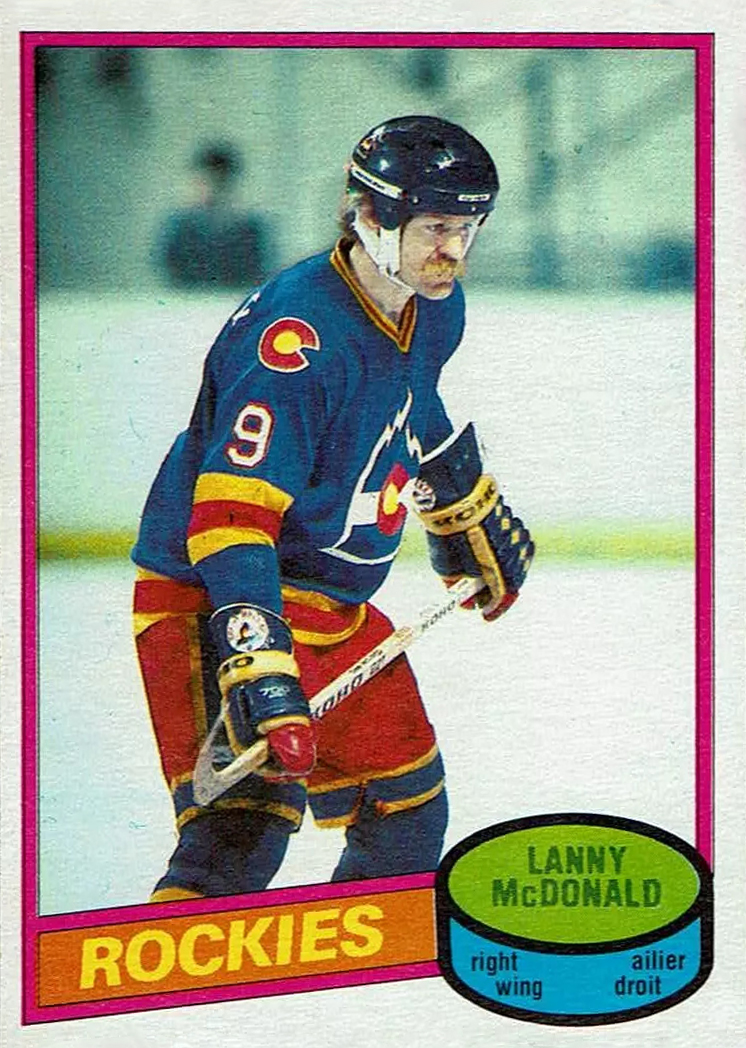
McDonald was no stranger to multi-goal games, he tallied 18 career hat tricks, including eight with the Toronto Maple Leafs (one a four-goal outing) and nine with the Calgary Flames. But during his short stay in Denver, fans only got to witness one such performance.
In the first period, McDonald opened the scoring just 5:22 in, beating Pittsburgh’s Nick Ricci with help from Merlin Malinowski. After the Penguins tied it up, McDonald struck again in the second frame with his 24th of the season, assisted by Paul Gagné and WaltMcKechnie, giving Colorado a 3-2 edge.
His third goal sealed the night, coming unassisted into an empty net with just 41 seconds left in the game. Not only did McDonald complete the hat trick, but he also collected two assists on goals by Lucien DeBlois and Mike Gillis, finishing with a five-point night. He registered five of Colorado’s 23 shots, while Rockies goaltender Al Smith turned aside 30 of 34 Pittsburgh attempts for the win.
McDonald’s path to Denver began with a December 29, 1979 trade that sent him and Joel Quenneville to Colorado in exchange for Pat Hickey and Wilf Paiement. His Rockies tenure spanned 142 games over parts of three seasons before he was dealt to Calgary on November 25, 1981, in a trade that saw Don Lever and Bob MacMillan head to Colorado.
Lanny McDonald played 1,111 regular season and 117 playoff games in the National Hockey League between 1973-74 and 1988-89 with the Toronto Maple Leafs, Colorado Rockies and Calgary Flames. Originally a fourth overall pick by the Maple Leafs at the 1973 NHL Amateur Draft, McDonald was inducted into the Hockey Hall of Fame in 1992.
On a Wednesday night at the Civic Arena (a.k.a. The Igloo), the Penguins faced off against the powerhouse Boston Bruins. With the game tied in the third period, Jean Pronovost scored his 50th goal of the season at the 11:01 mark. The goal came on Gilles Gilbert, assisted by Lowell MacDonald and Syl Apps.
That moment made Pronovost the first Pittsburgh Penguin ever to reach 50 goals in a single season. Larouche also scored in the game, his 45th, The match ended in a 5-5 tie.
Just over a week later, Pierre Larouche entered a game against the Washington Capitals with 49 goals. He scored number 50 at 11:16 of the second period, assisted by Ron Stackhouse and Rick Kehoe. With eight seconds left in the same period, he added another, goal number 51.
Despite Larouche’s heroics, the Penguins lost 5-4. It was just the Capitals' 11th win of the year.
Although Larouche and Pronovost combined for 105 goals, the Penguins were eliminated in the first round of the playoffs, losing a best-of-three series to the Toronto Maple Leafs. Neither player scored during the series.
While Pronovost was the first to reach 50, and Larouche edged him in total, Mario Lemieux now holds the single-season franchise record with a jaw-dropping 85 goals in 1988-89.
Much more NHL hockey trivia can be found at our Hockey Trivia website!
Despite Pittsburgh being in its inaugural NHL season, both teams entered the contest with nine wins apiece. Mikita wasted no time setting the tone, scoring just 3:58 into the game on Les Binkley with help from Pierre Pilote and Ken Wharram. Though the Penguins answered quickly, Mikita struck again unassisted at 7:36. By the end of the first, it was tied 2-2 but that would be the last time Pittsburgh would find the back of the net.
Mikita completed his hat trick at 11:32 of the second, once again with help from Pilote and Wharram. This marker ultimately stood as the game-winner. In the third period, he added a fourth goal at 8:49, capping off a dominant performance. By then, Pittsburgh had swapped goaltenders, with Hank Bassen replacing Binkley following a Pierre Pilote goal late in the second.
Mikita wasn’t done, he also assisted on Bobby Hull’s second goal of the night, giving him a five-point evening. Hull had a two-goal, one-assist effort while racking up ten shots. Pilote finished with a goal and three helpers in a 7-2 Chicago victory.
A tribute to Stan Mikita — one of the greatest Chicago Blackhawks of all time and a Hall of Famer.
Buy on AmazonThe Pittsburgh Penguins played the Chicago Blackhawks four times in their inaugural 1967-68 NHL season, two at the Pittsburgh Civic Arena and two at Chicago Stadium. In just their sixth game as a team, the Penguins knocked off the Hawks 4-2 at home on October 21, 1967. After Eric Nesterenko opened the scoring with a shorthanded goal for Chicago, Pittsburgh, powered by a Ken Schinkel hat trick, won their second game of the year and left the Blackhawks with an 0-5 record.
After the above mentioned 7-2 loss, the two teams battled to a 1-1 draw at the Civic Arena in mid-December. Ken Wharram scored for the visitors and Art Stratton scored for the Pens. Their final head-to-head on March 13, 1968 in Chicago was a close one. Chicago went up 3-0 by the midway point of the game but the Penguins made it close with the score ending 4-3 for the Blackhawks.